Welcome to DimmaJo Blog — a space where books meet personal growth, and every story becomes a stepping stone to becoming a better you. I created this blog because I believe that the right book at the right moment can shift your mindset, lift your spirit, and change the direction of your life. Here, I share: 📚 Books worth reading ✨ Lessons they teach us 🧠 Mindset shifts 🌱 Motivational reflections 🔥 Daily reminders to keep going Whether you’re looking for your next read or a spark of encouragement to stay consistent, you’ll find a bit of both here. Thanks for being here. Let’s turn pages and become better—one day at a time.
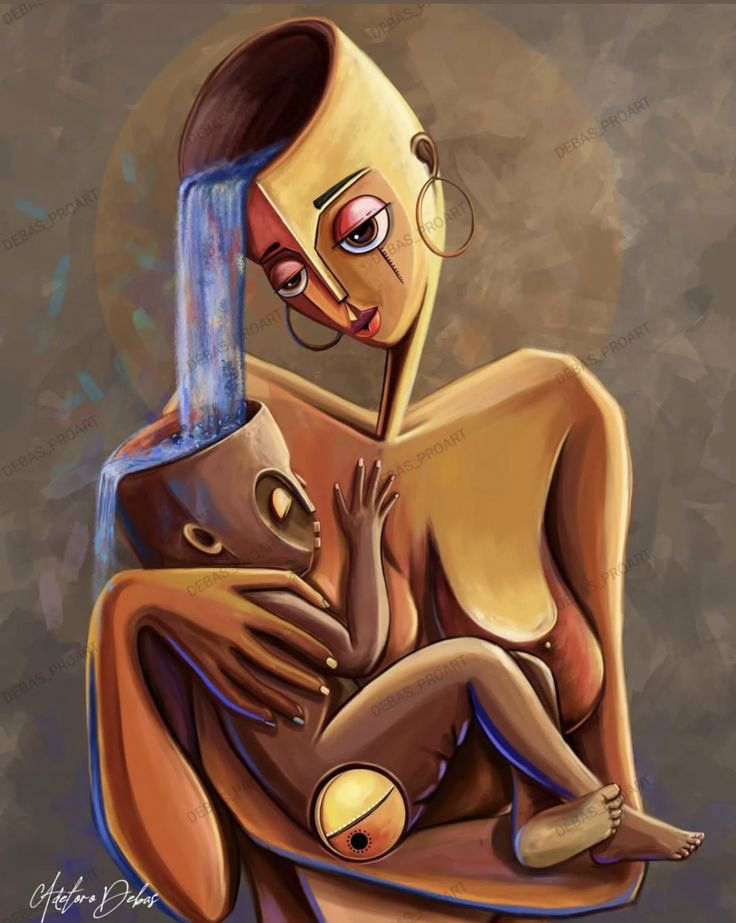
At first glance, this image feels unsettling. A mother whose head is hollow. A child being poured into her instead of born from her.
But sit with it a little longer—and it starts to speak.
This is not an image about weakness. It’s about sacrifice.
Sometimes, life drains us. Responsibilities, expectations, pain, love, loss—everything pours out of us until we feel empty. And yet, even in that emptiness, we keep showing up. We keep giving. We keep holding others together while we quietly fall apart inside.
The hollow head represents exhaustion.
Mental fatigue.
Burnout.
That season where you feel like you have nothing left.
Yet the child represents purpose.
Because here’s the truth no one tells you: You don’t need to feel full to be meaningful. You don’t need to be perfect to be powerful. And you don’t need to have it all together to still be someone’s safe place.
Sometimes, your emptiness is not failure—it’s evidence that you’ve been brave enough to give.
But this image also carries a warning. You were never meant to pour forever without refilling.
Even the strongest soul cracks when it ignores rest.
Even love needs care. Strength is not just in giving.
Wisdom is knowing when to receive.
So if you’re tired—rest. If you feel empty—pause. If you feel unseen—remember that even vessels that look cracked still carry life.
You are not broken. You are becoming. And becoming often hurts before it heals.
✨ If this spoke to you, take a moment today to pour something back into yourself. You deserve it.
What if the biggest thing holding you back isn’t a lack of talent — but a lack of freedom to think differently?
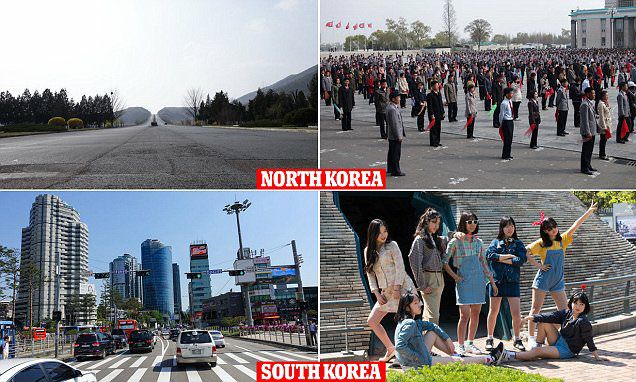
This image tells a story that goes far beyond geography. It reveals how control and choice quietly shape human destiny, and why growth flourishes only where minds are allowed to breathe.
At first glance, this image looks like a simple comparison.
Two places. Two crowds. Two realities.
But if you look deeper, it becomes something more powerful — a lesson about what shapes humanpotential.
Both sides share the same land, history, culture, and ancestry. Yet their outcomes could not be more different.
One side reflects order, uniformity, and silence. The other reflects movement, creativity, and individuality.
The difference isn’t intelligence. It isn’t talent. It isn’t destiny.
The difference is freedom.
Control Creates Compliance, Not Growth
When people are taught what to think instead of how to think, life becomes about survival, not possibility. Uniformity replaces curiosity. Obedience replaces innovation.
In such systems, people don’t stop being capable —
they simply stop being allowed.
Dreams shrink when questioning is punished. Progress slows when creativity is controlled. And life becomes about fitting in, not standing out.
Freedom Unlocks What Was Always There
On the other side, you see something different. Not perfection — but expression.
People choosing how to dress, where to go, what to create. Ideas colliding. Cultures evolving. Innovation happening naturally.
Freedom doesn’t magically make people better — it gives them room to become.
When people are allowed to think freely, they build freely. When they are allowed to choose, they grow.
The Real Lesson Isn’t Political — It’s Personal
This image isn’t only about countries. It’s about mindsets.
You don’t need a border to feel restricted. Fear can become a prison. Doubt can become a dictator. Comfort can quietly limit your potential.
Ask yourself:
•Where am I conforming instead of creating?
•Where am I playing safe instead of growing?
•What ideas have I silenced because they felt risky?
Progress — in life, career, or purpose — begins when you allow yourself mental freedom.
Freedom Starts From Within
You may not control where you were born, but you can control how boldly you think.
You can question limitations. You can challenge fear. You can choose growth over comfort.
Because when your mind is free, your life eventually follows.
Same world. Same human potential. Different outcomes — shaped by freedom, choice, and courage.
Take a moment to reflect: Where in your life are you following rules that no longer serve you?
Share your thoughts in the comments — your perspective might free someone else.
If this message resonated with you, share it with someone who feels stuck. Sometimes, one shift in perspective is all it takes to unlock growth.
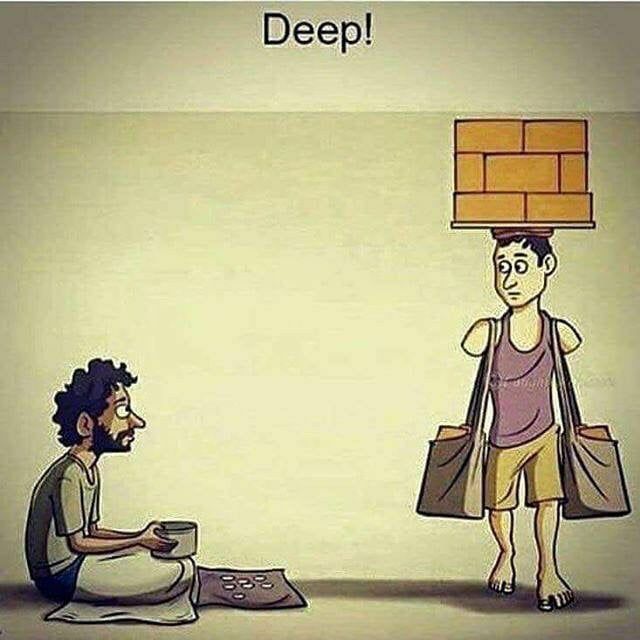
At first glance, the picture looks simple. One man sits on the ground, asking for help. Another walks past him, burdened with bricks on his head and heavy bags in his hands.
And yet, this image carries a powerful life lesson.
We often judge struggle by what we can see. We assume the person asking for help is the only one suffering, while the person still moving forward must be doing just fine. But life is rarely that straightforward.
The truth is: everyone is carryingsomething.
Some burdens are visible—poverty, illness, loss. Others are hidden—responsibility, pressure, expectations, silent battles no one applauds.
The man walking looks “better off,” but he is already overloaded. Stopping might break him. Helping might mean dropping what little balance he has left. Not because he lacks compassion—but because he, too, is surviving.
This teaches us two important lessons:
First, compassion should be paired with understanding. Not everyone who walks past your pain is heartless. Some people are fighting storms of their own. Grace begins when we stop assuming.
Second, don’t compare your struggle to someone else’s progress. Movement doesn’t mean ease. Strength doesn’t mean freedom. Many people you admire are simply enduring quietly.
Life is not divided into the “strong” and the “weak.” It’s divided into those who are hurting loudly and those who are hurting silently.
So be kind—to those who ask, and to those who can’t stop. And most importantly, be kind to yourself. If you’re still standing, still trying, still carrying your load— that alone is proof of your strength.
Sometimes, surviving is the deepest form of courage.
“What unseen weight do you think people around you are carrying today?”
There is a quiet moment no one applauds. A moment without witnesses. A moment where the world has done everything it can to bend you—and you finally realize something:
You don’t have to win today. You just have to refuse to break.
That moment changes everything.
I didn’t learn this from motivation quotes or loud success stories. I learned it slowly, through books read late at night, through underlined sentences soaked in emotion, through stories of people who stood at the edge and chose not to fall.
Here are three lessons from my reading list that reshaped how I see pain, endurance, and victory.
Lesson 1: Pain Is Not Proof of Failure
One of the most powerful realizations I encountered was this: Pain is not a sign you’re losing. It’s evidence that you’re still in the fight.
Books taught me that breaking isn’t defined by feeling overwhelmed. Breaking is quitting on yourself while you’re still breathing.
Every story of growth I read had a common thread—
The characters cried. They doubted. They wanted to stop.
But they didn’t.
Sometimes, the bravest thing you can do is say, “This hurts… but I’m still here.”
Lesson 2: Endurance Is a Silent Victory
We celebrate loud wins—money, applause, recognition. But books reminded me that the deepest victories happen quietly.
No one sees:
•The mornings you get up heavy-hearted
•The nights you choose discipline over despair
•The days you move forward without motivation
Yet those moments matter most.
Endurance is not dramatic. It is faithful. And faithfulness compounds.
The moment you refuse to break, even when nothing improves immediately, you have already won something greater than results— You’ve won control over your spirit.
Lesson 3: Becoming Strong Often Feels Like Falling Apart
This lesson hit the hardest.
Many books describe transformation not as a smooth ascent, but as a dismantling. Old beliefs crack. Old versions of you die. Comfort disappears.
And in that chaos, it feels like you’re losing yourself.
But you’re not.
You’re being rebuilt.
Strength doesn’t arrive wrapped in confidence—it arrives disguised as exhaustion, confusion, and persistence. If you feel like everything is unraveling, it may be because you are outgrowing the version of you that could no longer survive where you’re going.
The Real Win
Winning isn’t always standing tall at the finish line. Sometimes, winning is simply whispering:
“I won’t give up today.”
If you are reading this while tired, discouraged, or quietly holding yourself together— know this:
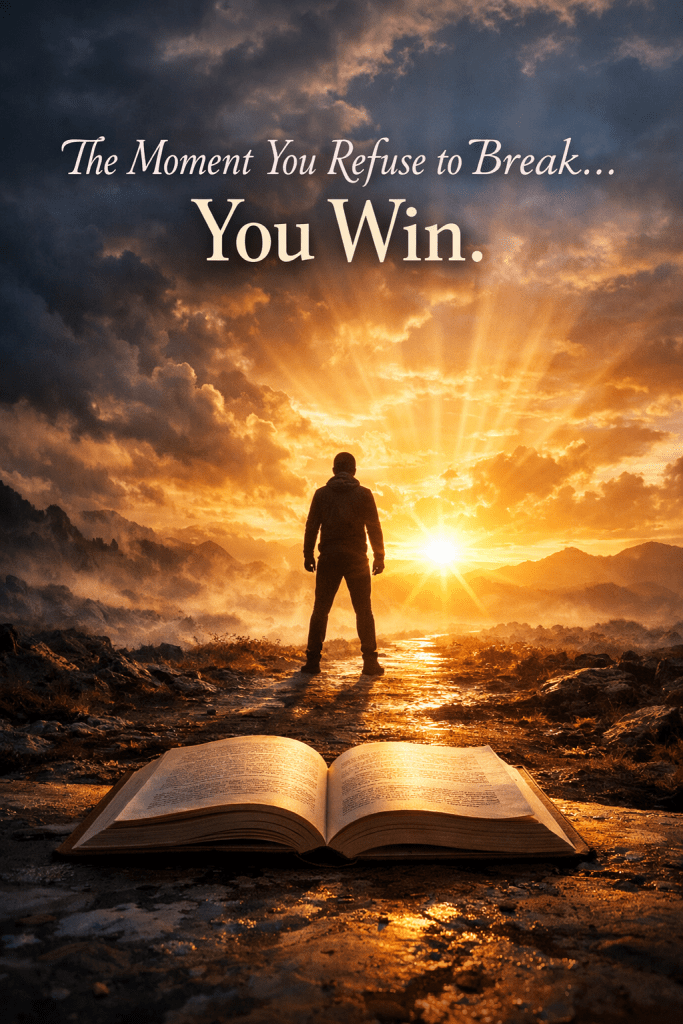
The moment you refuse to break… you win. Even if no one claps. Even if nothing changes yet.
Because strength is not about never bending. It’s about choosing, again and again, not to shatter.
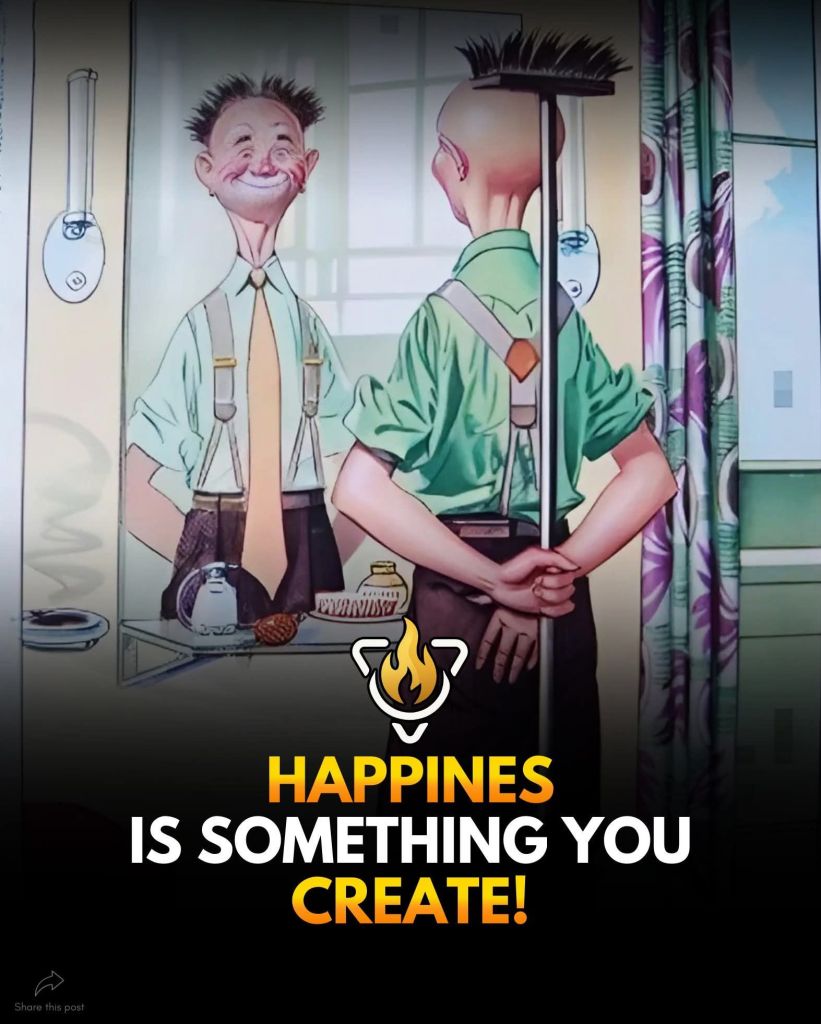
The man in the mirror is smiling—not because life is perfect, but because he chose to smile.
Look closely. Nothing magical has changed around him. Same room. Same reflection. Same life. The only difference is what he decided to do with it.
Many of us wait for happiness like it’s a delivery that got delayed. “When I get more money.” “When life slows down.” “When they finally understand me.” “When everything falls into place.”
But happiness doesn’t arrive wrapped in perfect circumstances. It’s built quietly, daily, from the inside out.
Happiness is waking up tired and still choosing gratitude. It’s accepting what you cannot change and having the courage to change what you can.
It’s learning to stop measuring your life by someone else’s ruler. It’s finding peace in progress, not perfection.
The mirror doesn’t lie—but it also doesn’t decide who you are. You do. You create happiness when you stop being at war with yourself. When you forgive the version of you that didn’t know better. When you celebrate small wins that no one else notices. When you allow yourself to be human—flawed, growing, trying.
Life will always give you reasons to frown. That part is guaranteed. What’s not guaranteed is how you respond. Happiness is not a destination. It’s a daily decision.
So today, stand tall. Adjust your mindset. Smile—not because everything is easy, but because you’re still here, still trying, still becoming. Because in the end, happiness isn’t found in the mirror. It’s created by the person standing in front of it. ✨
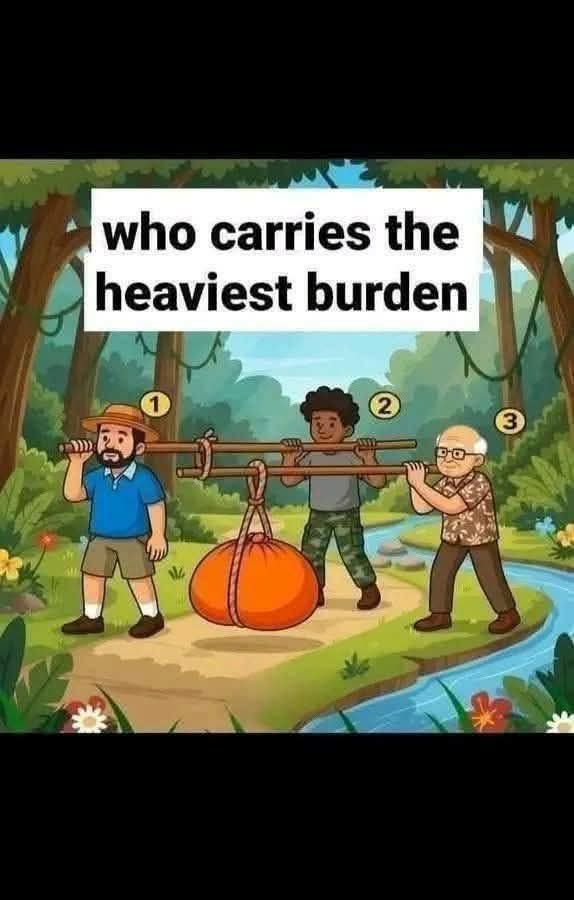
They had been walking since sunrise. The forest path curved like a question mark, and the river beside it whispered answers no one asked out loud. Between them hung the sack—round, swollen, silent—swaying from the wooden poles like a heart outside a body.
People who passed them argued quietly about the same thing. “It’s clearly number two,” someone said. “The weight hangs closest to him.” “No,” another insisted. “Look at number one—he’s holding the pole on his shoulder. That strain goes straight to the spine.”
An old woman shook her head. “You’re all wrong. Number three is weakest. Burdens feel heavier when your body has lived longer.”
The three men never joined the debate. Number One walked with his jaw tight, eyes forward. He had volunteered first. He was used to being the one who stepped up, the one people expected strength from. Every few minutes, his shoulder burned, but he told himself pain was proof of usefulness.
Number Two stayed quiet in the middle. The sack hung closest to him, brushing his knees with every step. He adjusted his grip often, not because it hurt most—but because if he loosened even a little, the others would feel it instantly. He carried not just weight, but balance.
Number Three breathed hard. His hands trembled around the pole. He had joined them late, afraid he would slow them down.
Every step reminded him of years behind him instead of ahead. Still, he kept walking, because turning back felt heavier than moving forward.
Then, without warning, the rope creaked. The sack dipped sharply.
All three froze. In that moment, something strange happened.
Number One felt fear—not of pain, but of failure. Number Two felt responsibility tighten like a knot. Number Three felt resolve harden where doubt used to live.
They adjusted together. No words. Just instinct.
The load steadied. And for the first time, they looked at each other and laughed—not because it was easy, but because it wasn’t crushing them anymore.
That’s when the truth became clear. The heaviest burden wasn’t on any single shoulder.
It was the silence, the assumptions, the belief that suffering could be measured from the outside.
Because weight changes. Strength shifts. And sometimes, the one who looks strongest is just hiding the ache better.
They kept walking. Not because the burden grew lighter— but because they finally carried it together.
I already knew the college I would attend when I was a child, when I was still in primary school. Right from the first day I saw a student of that school walk past our house, her confidence, the way she carried herself, her elegance, and how her uniform was nearly ironed worn with sparkling white socks with red stripes and a well-polished brown Cortina shoe.
I told my parents over and over again that I would love to attend that college. It became a daily reminder. Whenever any subject about school comes up, I will always talk about it.
The college is one of the best in the state in all ramifications, academically and in composure. I have heard so many amazing things about them that I promised myself that I will do well to pass the entrance exam so my parents would not have any choice but to grant my wish.
I believe it was worth it at the end, I passed with flying colors when the results were out and I was registered without stress.
I can still remember how happy I was the first time I went to school, everything was just as I had imagined it, the buildings, the environment, the classroom, everywhere was neat and tidy even the students where well mannered and composed and I couldn’t wait to be part of them.
For a long time, we were taught to measure success in shiny things. Cars. Watches. Yachts.
Symbols that look impressive from a distance but grow strangely quiet once you finally sit with them. Somewhere along the way, many of us began to confuse price with value.
But when you strip life down—past the noise, the pressure, the performance—something honest remains. The real luxuries don’t sparkle. They breathe. They heal. They slow you down.
They look a lot like this.
Time.
Not the kind that rushes you, but the kind that stretches. Time to think without checking the clock. Time to be present without guilt. Time that belongs to you, not deadlines or expectations.
Health.
The ability to wake up and move your body without pain. To breathe deeply. To eat without fear. Health is invisible when it’s there—and priceless the moment it’s not.
A quiet mind.
In a world addicted to noise, a calm inner space is a rare treasure. A mind that isn’t constantly racing, comparing, or replaying worries.
Peace is not laziness. It’s clarity.
Slow mornings.
Mornings without alarms screaming urgency. Without rushing through coffee or skipping breakfast. Slow mornings remind us that life is not a race—it’s a rhythm.
Being able to travel.
Not always far. Sometimes just away. A change of scenery that refreshes the soul. Movement that reminds you how big the world is—and how small your worries can become.
Rest without guilt.
Rest that doesn’t need to be earned. Rest that doesn’t come with explanations.
The kind of rest that repairs you instead of shaming you.
Home-cooked meals.
Food made with intention. Familiar flavors. Shared tables. Meals that nourish more than your body—they anchor you.
Deep, restorative sleep.
Sleep that resets you. Sleep that heals what stress quietly breaks during the day. There is wealth in waking up rested.
Calm, “boring” days.
Days without drama. Without crisis. Without chaos. The kind of days we once overlooked but later realize were a blessing.
Meaningful conversations.
Talks that go beyond small talk. Words that connect instead of impress. Listening that feels like being seen.
People you love who love you back
Not audiences. Not followers. Not admirers. Just people who stay. People who choose you without conditions.
These are the luxuries that don’t show up in advertisements. They don’t need validation. They don’t depreciate with time.
And the beautiful truth is this: many of these luxuries don’t require more money—they require more awareness. More intention. More courage to define success on your own terms.
So maybe the goal isn’t to add more to your life. Maybe it’s to protect what already matters. Because at the end of it all, the richest life is not the loudest one— It’s the most peaceful.
Failure has a way of stripping life down to its bare bones. It humbles you. It shakes your confidence. Sometimes, it leaves you questioning your worth, your direction, and even your identity.
But failure is not the end of your story—it’s often the place where rebuilding truly begins.
Books can become quiet companions in these moments. They don’t rush you. They don’t judge you. They meet you exactly where you are and gently remind you that broken seasons can still produce strong people.
Here are five powerful books that don’t just motivate—you’ll feel them. They help you heal, reframe failure, and rebuild your life from the inside out.
1. Man’s Search for Meaning – Viktor E. Frankl
This is not a loud or flashy book. It is calm, deep, and hauntingly honest.
Frankl, a Holocaust survivor, shows that when everything is taken away—status, comfort, certainty—meaning is the one thing no one can steal from you.
After failure, we often feel empty. This book teaches that even pain can have purpose if you choose to find meaning in it.
Why it helps after failure:
It helps you stop asking “Why did this happen to me?” and start asking “What can this make of me?”
2. The Obstacle Is the Way – Ryan Holiday
Failure feels like a wall. This book teaches you to see it as a door.
Rooted in Stoic philosophy, Holiday explains that the very thing blocking your path can become the path itself. Loss becomes clarity. Setbacks become strength. Delays become discipline.
Why it helps after failure:
It shifts your mindset from victim to builder. You stop waiting for life to be easy and start learning how to be strong.
3. Atomic Habits – James Clear
After failure, motivation is fragile. Big goals feel overwhelming. This book meets you at ground level.
Instead of telling you to “change your life,” it teaches you how to change your systems, one small habit at a time. You rebuild quietly, consistently, and without pressure.
Why it helps after failure:
Because rebuilding your life doesn’t happen in one breakthrough moment—it happens in small, repeatable actions when no one is watching.
4. Rising Strong – Brené Brown
Failure often comes with shame—the feeling that something is wrong with you.
Brené Brown helps you face that shame without running from it. She teaches how to rise after disappointment, rejection, and emotional collapse by owning your story instead of hiding from it.
Why it helps after failure:
It reminds you that falling does not make you weak. Refusing to rise does.
5. You Are a Badass – Jen Sincero
This book is bold, funny, and unapologetically honest.
If failure has silenced your confidence or made you doubt yourself, this book speaks directly to the voice in your head that says “I can’t.” It challenges self-sabotage and pushes you to believe in your own potential again.
Why it helps after failure:
Because sometimes rebuilding your life starts with remembering who you were before fear took over.
Final Reflection: Rebuilding Is Not Rushing
Failure is not proof that you are incapable. It is proof that you tried—and that means you are still in the game.
You don’t need to rebuild your life all at once. Start with a page. A chapter. A quiet moment with a book that understands you.
Question for you:
Which book feels like the one you need right now—and what part of your life are you ready to rebuild first?
I am not searching for happiness, I am searching for peace. If there is happiness, there is sadness. If something can rise, something must fall. If you can attain something, there’s something to lose. That’s why it’s difficult, that’s why I stop at the moment I don’t know what type of happiness you mean.
Being satisfied with where I’m standing, yes, does it mean I don’t have hard moments, I have hard moments, and that’s why for me, like what is it that I ultimately look for… I will call it just PEACE!